How Early Should You Arrive at the Airport

Updated
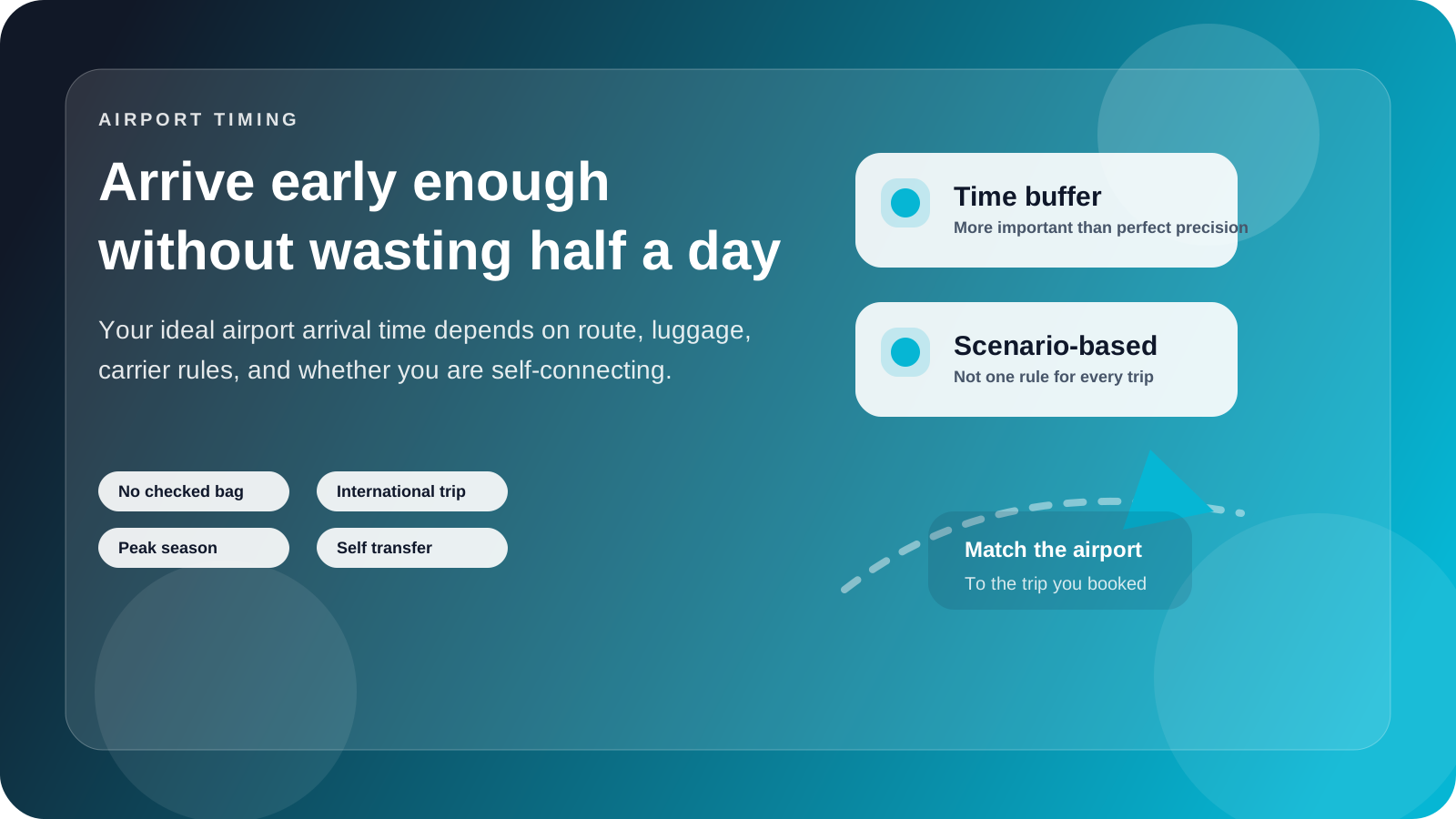
Airport timing is one of those travel questions people want a universal answer to. The truth is simpler and more useful: how early you should arrive depends on the ticket, the airport, your baggage, and how much risk is built into the itinerary.
This guide belongs in the Travel Hacks & Trip Planning hub because good airport timing is really about removing avoidable stress and avoiding expensive mistakes.

Packing image supporting faster and simpler airport processing.
There is no one right airport rule
A short domestic flight with no checked bag does not behave like a long-haul international departure. Neither should your arrival plan. The right buffer depends on complexity: baggage, unfamiliar airports, peak periods, family travel, and whether anything in the itinerary is fragile.
That is why airport advice should be scenario-based. A useful answer is not “always three hours.” It is “give yourself enough buffer for this specific trip.”
Bag drops and airline rules change the calculation
The moment checked baggage enters the picture, your airport timing needs more margin. Budget airlines also deserve more caution because bag measurement, check-in deadlines, and boarding procedures can be less forgiving than travelers expect.
If your ticket has strict rules, build around them. Missing a cutoff because you assumed the airport would be quick is an expensive form of optimism.

Summer airport scene image emphasizing longer queues and travel-day friction.
International trips and self-connections need more buffer
International departures usually deserve extra time because document checks, larger security flows, and more complicated terminals all increase uncertainty. Self-connected itineraries deserve even more caution because a delay on one leg can create real downstream risk.
If your itinerary depends on everything going perfectly, your airport arrival time should not be aggressive.
Summer and holiday periods change the mood of the airport
Peak travel periods create more queues, more family groups, and more general friction. Even when the formal airport recommendation does not change, the lived experience often does. That makes a slightly earlier arrival sensible, especially if you are traveling at popular times of day.
In short: do not treat an August airport the same way you treat a sleepy mid-November weekday departure.

Flight comparison image supporting scenario-based airport timing decisions.
Use a risk-based timing rule
If the trip is simple, the buffer can be smaller. If the trip is complex, the buffer should grow. This risk-based rule is more useful than memorizing a single number because it adapts to the actual shape of your journey.
Good airport timing is not about killing hours in a terminal. It is about preventing the kind of rushed mistake that ruins a cheap trip.
- Add more time for checked bags, strict carriers, and unfamiliar airports.
- Add more time in peak summer and holiday periods.
- Protect self-connections with generous buffer.
- Use lighter packing to keep the airport process simpler.
Work backward from the airline's actual cutoffs
Start with the bag-drop and boarding deadlines stated by your operating airline. Add time for document checks, security, the walk to the gate, and a buffer for your route to the airport. An airport arrival recommendation is not the same as a check-in cutoff; reaching the terminal before departure does not mean the airline can still accept you.
For an unfamiliar airport, identify the terminal before booking ground transport. Add extra time if your group needs assistance or if you must complete checks at a desk. Recheck the airline and airport guidance close to departure instead of applying one fixed arrival rule to every flight.
Related reading
-
Speed up the process with Budget Travel Packing List.
-
Handle peak season better with Summer Travel Hacks Most People Don't Know.
-
Avoid airline-rule surprises with How to Avoid Hidden Fees When Booking Flights.
FAQ
How early should I arrive for a domestic flight with no checked bag?
If the airport is familiar and the airline is straightforward, you can usually use a shorter buffer than you would for an international trip, but you still need enough time for security and any unexpected queue.
Should I arrive earlier in summer or holidays?
Yes. Peak travel periods create more pressure at check-in, security, and boarding, so extra buffer is usually sensible.
Do budget airlines require more airport time?
Often yes, especially when bag rules are strict, airport check-in has deadlines, or the carrier uses secondary airports with longer processing surprises.
The right airport arrival time is the one that respects the complexity of your trip. Build buffer where the risk is real, and you will almost always make better travel-day decisions.
Related routes and guides
Use this advice on a real route
Airline rankings, economy tips, and booking tactics only become useful once you compare the fare family, airport transfer, and route timing together.
Route guide
Manchester to Nantes
Use this route page to compare airport fit, baggage costs, timing, and the prefilled search for MAN to NTE.
Route guide
Berlin to Nice
Use this route page to compare airport fit, baggage costs, timing, and the prefilled search for BER to NCE.
Search shortcut
Browse route guides with prefilled searches
Move from advice to a route page where airport codes, fare context, and the search form are already aligned.