Best Time to Book Flights for Summer Travel

Updated
Summer flights are expensive for a simple reason: everyone wants similar dates. That means the best time to book is not about a magic weekday. It is about how early you start watching, how fixed your plans are, and whether you can still move the trip once you see the calendar.
This guide works best alongside How to Find Cheap Flights and How to Use Flight Alerts to Save Money, because timing alone rarely saves you without a good search process.

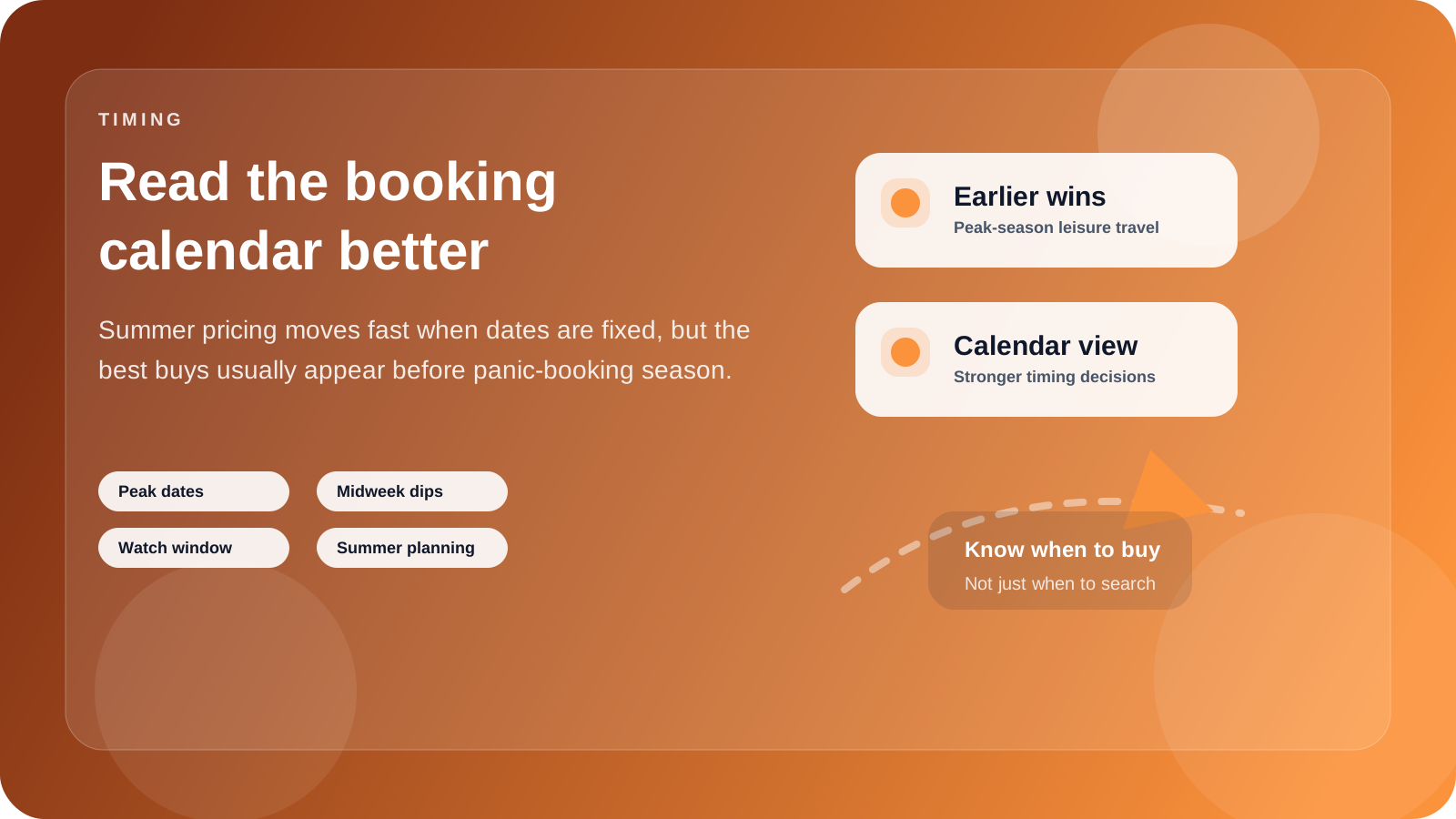
Search workflow image showing how timing and comparison tools work together.
Summer behaves differently from ordinary travel periods
Summer combines school calendars, vacation demand, festivals, weddings, and strong leisure travel sentiment. When all of those overlap, cheap inventory disappears faster and the penalty for waiting becomes more obvious than it is in quieter months.
That is why peak-season trips reward earlier monitoring. You do not need to buy the moment schedules open, but you do need enough runway to learn the route and act before the most desirable dates become everybody’s fallback option.
Use booking windows as a guide, not a superstition
A booking window is useful because it reminds you when to pay serious attention. A transatlantic summer trip with fixed dates usually deserves earlier monitoring than a spontaneous shoulder-season city break. The exact day is less important than whether you are still shopping before demand hardens.
Think of it this way: the closer you get to your trip, the less leverage you have. If the travel dates are popular and you still need a good departure time, nonstop option, or reasonable baggage allowance, advance planning becomes even more valuable.
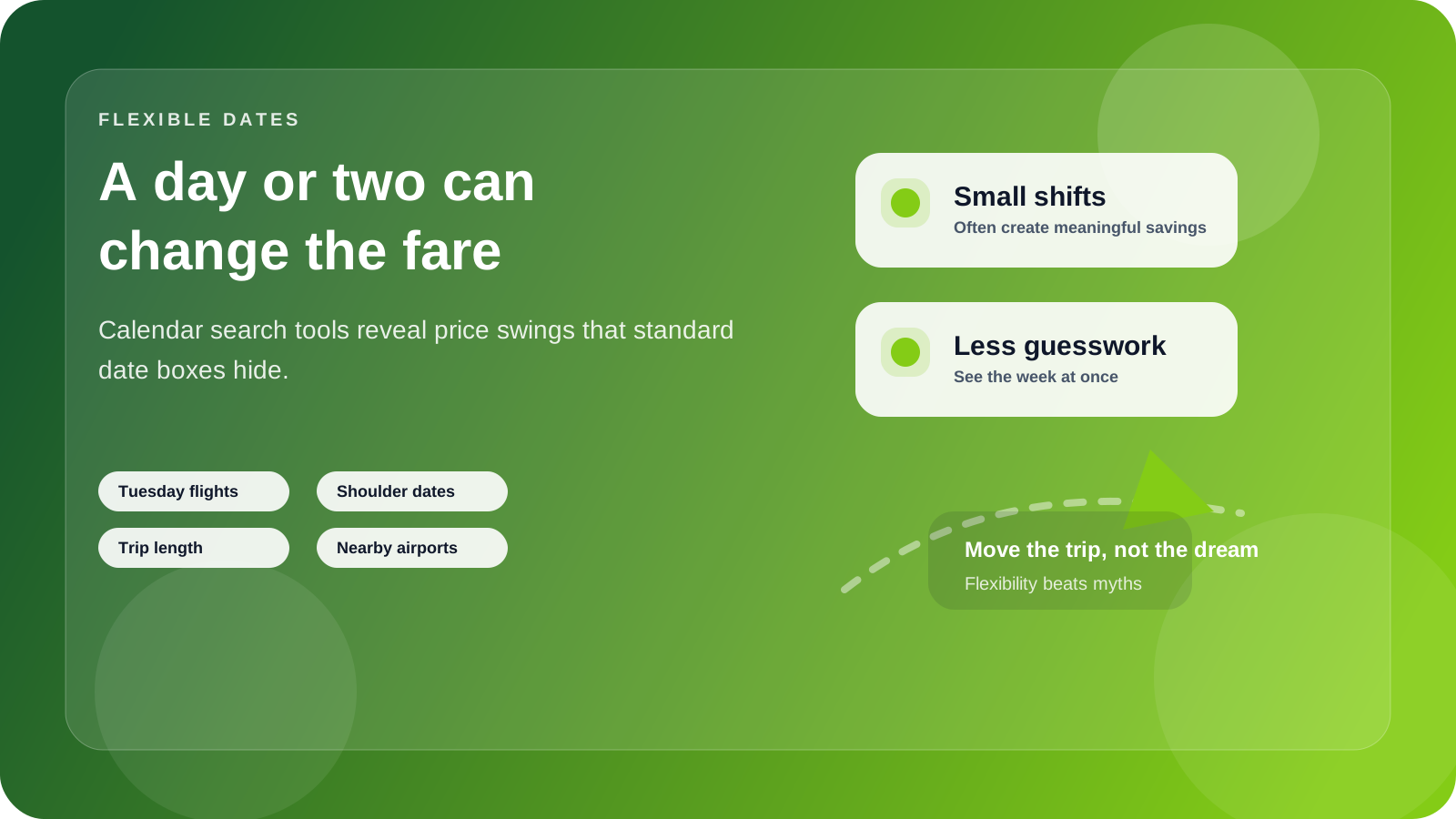
Calendar image focused on low-fare date clusters around peak summer demand.
Alerts help you catch the useful part of the pricing curve
Most travelers do not need to obsessively monitor fares if they set good alerts. Alerts let you start early without committing too early. You get to see how the route behaves, note the dips, and book when the fare lines up with your target instead of reacting emotionally every time it changes.
This is especially helpful on summer Europe routes. If you are debating Porto versus Valencia or Milan versus Rome, alerts can show you which direction the market is nudging you toward before you lock in hotels and local transport.
Flexible dates create better booking timing
A booking window becomes much more powerful when you combine it with flexibility. If your trip can leave on Tuesday instead of Saturday, or run for eight nights instead of seven, the best time to book becomes a wider and more forgiving range.
That matters in summer because even a strong booking window cannot rescue a very expensive date pattern. Good timing helps, but the biggest wins still come from avoiding the most crowded departure and return combinations where possible.
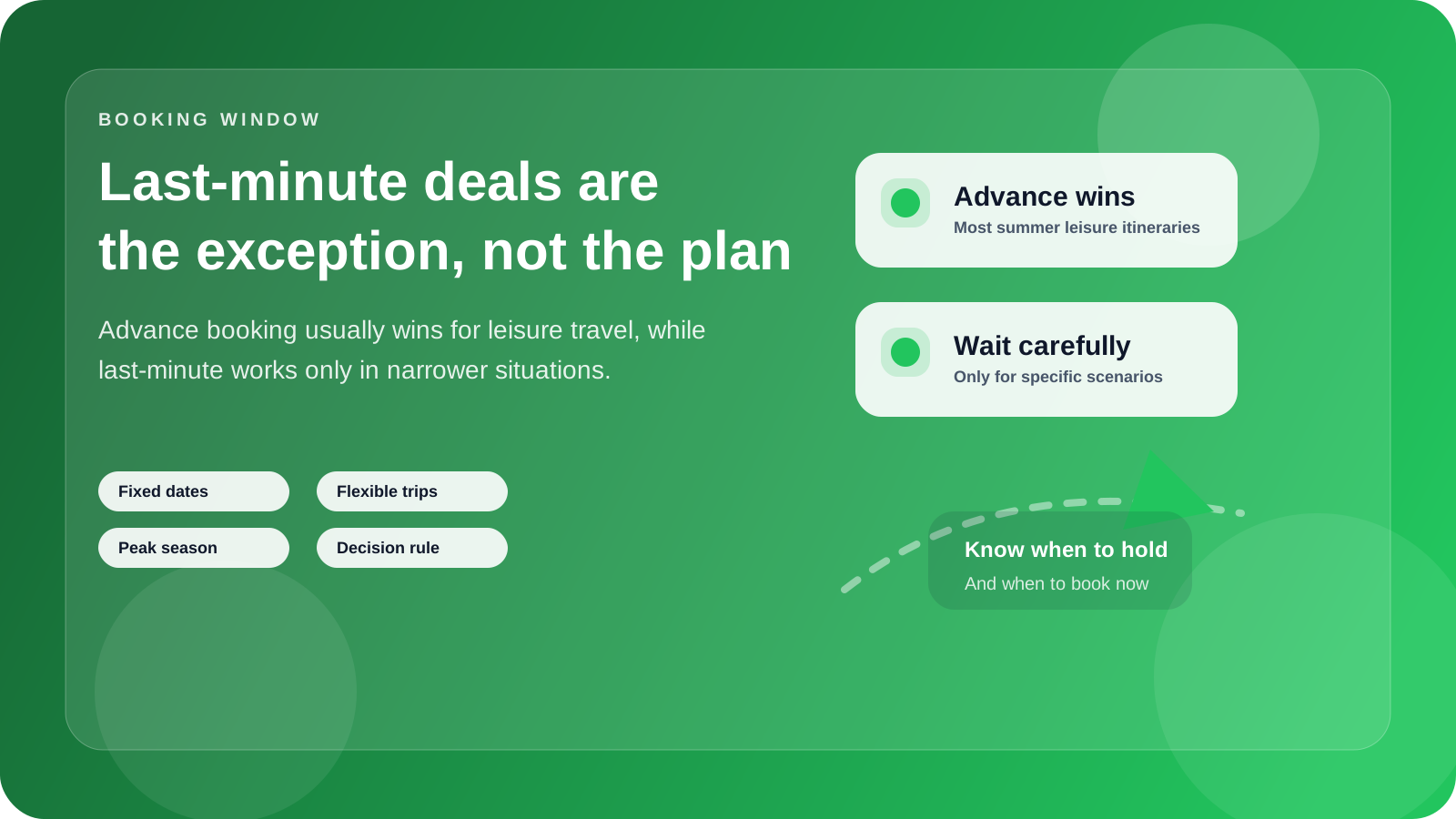
Visual comparison of advance booking against last-minute buying behavior.
Know when to stop waiting
The goal is not to predict the absolute bottom. The goal is to book a fare you feel good about before the market gets worse. If you have a fixed itinerary, a price within your comfort zone, and a schedule that suits you, that is usually your answer.
Summer travelers often overstay their search because they are hoping for a dramatic drop that never comes. The better discipline is to decide your acceptable price range in advance, then book once a realistic itinerary lands there.
- Start monitoring earlier if your dates are fixed or popular.
- Use alerts instead of guessing when the best day might be.
- Compare several summer departure patterns, not just one exact weekend.
- Do not chase the perfect low; chase the best overall fit.
Set a deadline around the least flexible part of summer
Write down which dates you can actually change before setting an alert. School holidays, a wedding, or a fixed accommodation booking can make your apparent flexibility much smaller than a calendar suggests. If only the return can move, compare return dates while holding departure constant; otherwise you may monitor fares you cannot use.
Set a maximum acceptable total for your group, including bags, and a date to make the decision. These are personal planning limits, not forecasts. If the acceptable itinerary reaches that total before your deadline, booking removes the risk of losing it. No fixed number of weeks guarantees the lowest summer fare.
Related reading
-
Use How to Find Cheap Flights to improve the search side of the equation.
-
Pair timing with How Flexible Dates Save You Money on Flights if your schedule is not locked.
-
If you are tempted to wait, read Last-Minute Flights vs Advance Booking first.
FAQ
How early should I start watching summer flights?
For most leisure trips, it is smart to start monitoring several months before departure so you can see the pattern before you need to buy.
Is booking extremely early always better for summer?
Not always. Booking too early can limit comparison, but waiting until the last minute on peak-season trips usually leaves you with fewer good options.
What if my summer dates are fixed?
If your dates are tied to school breaks or a wedding, start earlier and lean harder on alerts and nearby-airport checks because flexibility is no longer your biggest lever.
The best time to book flights for summer travel is early enough to give yourself options and late enough to compare the market intelligently. Once demand is obvious, waiting is usually not a strategy.
Related routes and guides
Use this advice on a real route
Airline rankings, economy tips, and booking tactics only become useful once you compare the fare family, airport transfer, and route timing together.
Destination guide
Milan
Check the arrival-airport context, route links, and destination fit before treating the lowest fare as the best value.
Destination guide
Porto
Check the arrival-airport context, route links, and destination fit before treating the lowest fare as the best value.
Search shortcut
Browse route guides with prefilled searches
Move from advice to a route page where airport codes, fare context, and the search form are already aligned.