How Flexible Dates Save You Money on Flights

Updated
Flexible dates are one of the few cheap-flight strategies that still work across many routes and seasons. Airlines price demand, not just distance, so moving the trip slightly can open a completely different fare pattern.
That is why flexible dates belong at the center of the Cheap Flights & Booking Strategies hub. They give you options before you even start hunting for tricks.

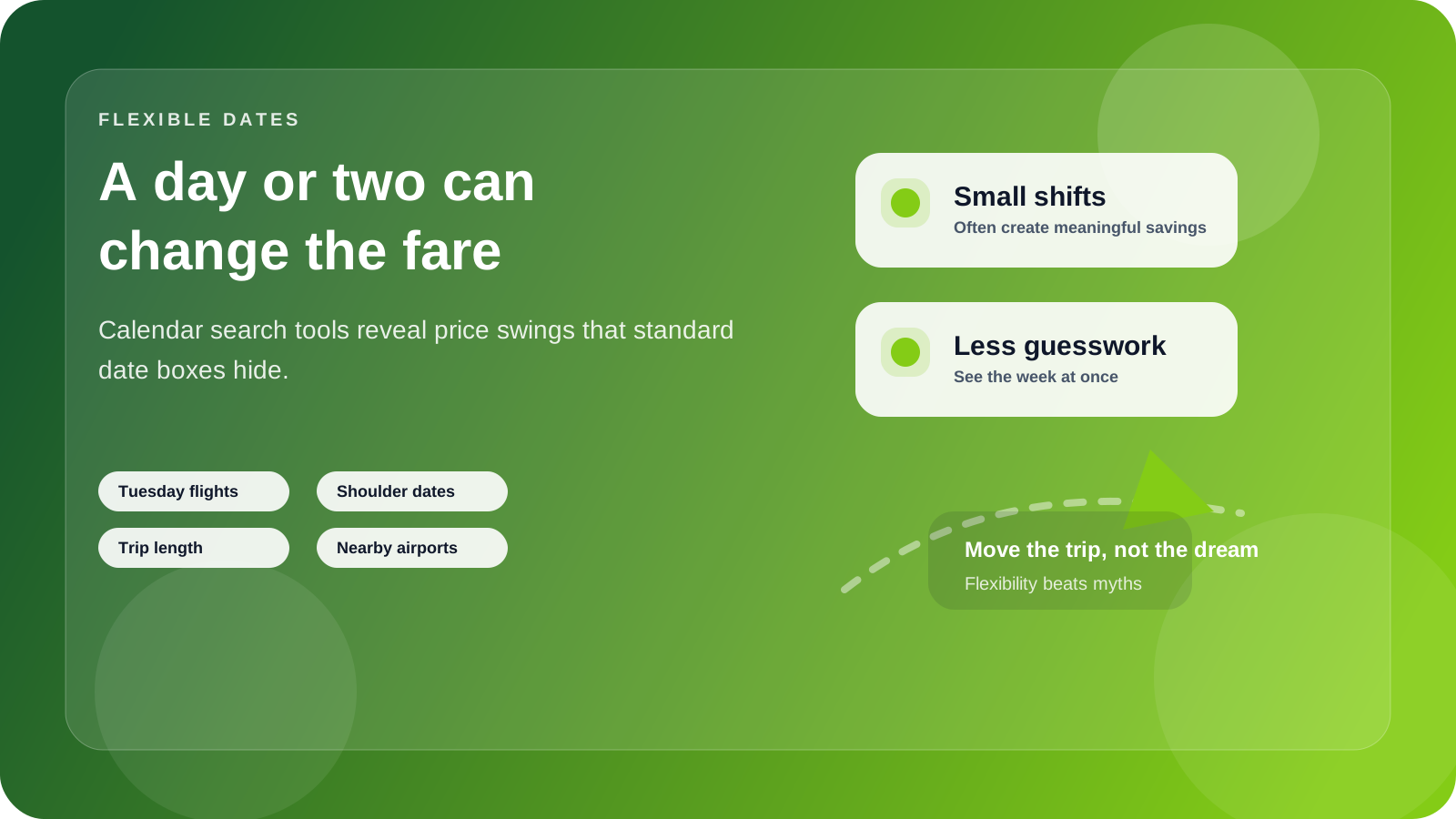
Flight-search interface focused on date flexibility and whole-week comparison.
A one-day shift can move you into a different market
Airfare is not priced with perfect logic from a traveler’s point of view. Friday-to-Sunday demand can behave very differently from Tuesday-to-Thursday demand even on the same route. When you search only one exact date pair, you miss that pattern completely.
Flexible dates let you compare how the airline values different parts of the week. That is often where the savings come from.
Trip length matters almost as much as departure day
Many travelers think only about the departure date, but the return date and overall trip length are just as important. Seven nights may price differently from eight or nine, especially in summer when the most common vacation patterns cluster around the same return days.
Changing the trip by one day can sometimes keep the whole experience intact while making the fare much more reasonable.
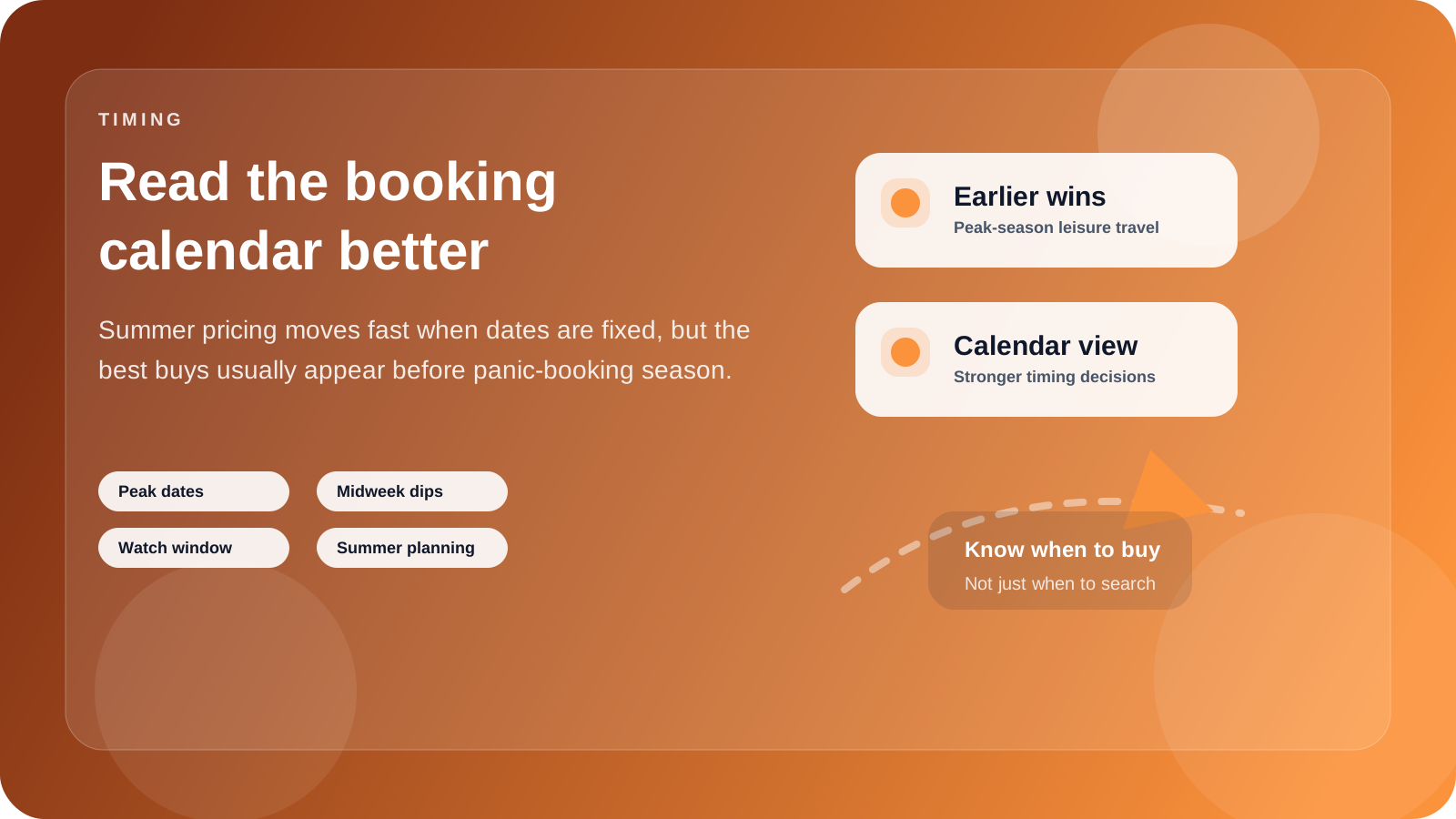
Calendar heatmap image showing price patterns around summer demand.
Flexible dates are most powerful in peak seasons
Summer, holidays, and school-break periods are when date flexibility becomes a superpower. The market is crowded, which means small deviations from the most obvious departure patterns can help you avoid the worst of the price pressure.
If your trip is not fully fixed, flexible dates can do more for your budget than obsessing about a mythical cheapest booking day.
Use alerts to cover the dates you are willing to accept
Alerts become much stronger when they monitor a date range rather than one rigid itinerary. If you know you could leave on Tuesday, Wednesday, or Thursday, build that into the watchlist. You will see more of the useful price movement and less false disappointment.
This turns flexibility into a system. You are not just “being open.” You are telling the market exactly how much openness you can exploit.

Alert dashboard image showing how date flexibility strengthens route monitoring.
Stay flexible where it matters most
You do not need infinite flexibility. Even modest flexibility helps. Maybe the destination is fixed but the departure day is not. Maybe the trip length is flexible but the week itself is not. Those partial wins still matter.
The goal is not chaos. It is selective flexibility in the places where airlines are most likely to reward it.
- Search the whole week before committing to one departure day.
- Test multiple trip lengths instead of assuming the default is best.
- Use flexible-date alerts if your schedule allows it.
- Prioritize flexibility around peak travel periods.
Compare dates without accidentally comparing different holidays
If you want seven nights away, move departure and return together first. Then compare six- and eight-night alternatives separately. Otherwise a cheaper calendar cell may simply represent a shorter stay or a less convenient return.
Illustrative example: moving departure by one day saves €45 on the flight but requires an additional €70 hotel night. The total rises €25. A date shift that preserves the number of nights avoids that particular trade-off. Record time off work, accommodation, baggage, and arrival times alongside the airfare so that flexibility remains a real option rather than a misleading calendar price.
Related reading
-
Combine this with How to Find Cheap Flights for the full search process.
-
Use Best Time to Book Flights for Summer Travel if your dates fall in peak season.
-
Add How to Use Flight Alerts to Save Money to keep the route under watch.
FAQ
How much can flexible dates really save?
It depends on the route and season, but even a one- or two-day shift can make a noticeable difference, especially on leisure-heavy routes.
What is the easiest way to use date flexibility?
Search a week view or month view first, then narrow to the combinations that keep both the fare and the trip length sensible.
Do flexible dates matter more than booking timing?
Often yes. Good timing helps, but being able to avoid the most expensive departure and return days usually gives you more leverage than trying to guess the perfect booking day.
Flexible dates save money because they expose the fare structure most travelers never see. Even small adjustments can move your trip into a much friendlier part of the pricing calendar.
Related routes and guides
Use this advice on a real route
The practical test is not which fare looks lowest first. It is which route still works after baggage, transfers, and schedule quality are included.
Route guide
Manchester to Carcassonne
Use this route page to compare airport fit, baggage costs, timing, and the prefilled search for MAN to CCF.
Route guide
London to Perugia
Use this route page to compare airport fit, baggage costs, timing, and the prefilled search for LON to PEG.
Search shortcut
Browse route guides with prefilled searches
Move from advice to a route page where airport codes, fare context, and the search form are already aligned.